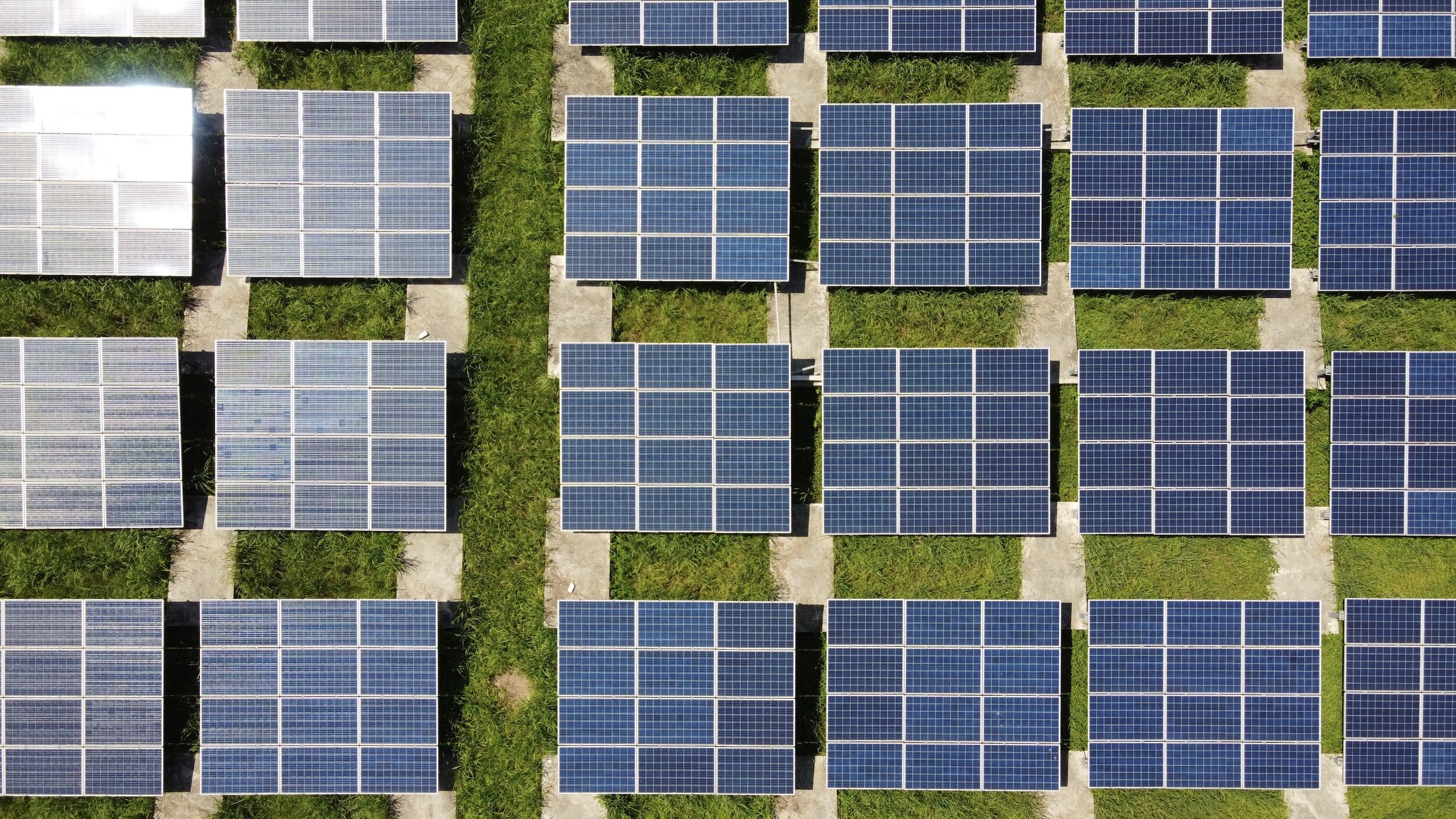
My research focuses on the control and optimization of energy and water systems, the integration of distributed energy resources (DER) such as solar PV, electric vehicles, and battery storage into smart grids, and the design of competitive and equitable market mechanisms for transactive energy systems. I combine optimization, control theory, and dynamic programming with microeconomic theory, pricing, game theory, and mechanism design, and I value practical solutions grounded in mathematics and economics.
Retail Tariff Design & Net Metering Economics
How should a utility bill customers who both consume and produce electricity? I developed NEM X, a tariff model that nests existing net energy metering designs through differentiated import (π⁺) and export (π⁻) rates, fixed charges, and time-of-use differentials. Under NEM X, the prosumer’s optimal consumption follows a two-threshold policy whose thresholds are computed in closed form, giving three modes: net-consuming, net-zero, and net-producing.
Building on this response model, I formulate the regulator’s rate-setting problem as a stochastic Ramsey pricing program under revenue adequacy, and quantify how tariff parameters shape social welfare, cross-subsidies between prosumers and consumers, DER payback periods, and long-run solar adoption. Recent work endogenizes PV investment under asymmetric NEM and tracks how NEM reform is evolving across U.S. states.
- Monograph2026
- PowerUp2026Optimal Solar Investment and Operation under Asymmetric Net MeteringN. E. Lado, A. S. Alahmed, A. Botterud, S. Amin
- Ph.D. thesis2024
- IEEE TSG2023
- Utility Dive2023
- ACM EIR2022
Behind-the-Meter DER Scheduling
With storage and flexible loads behind the meter, the prosumer’s problem becomes a stochastic dynamic program whose exact solution scales exponentially. I characterize the structure of the optimal policy, which schedules flexible demands by a priority list that defers less valuable loads to hours of abundant behind-the-meter generation. I then derive a closed-form co-optimization algorithm with linear computational complexity through a relaxation–projection approach, together with sufficient conditions for its optimality.
With collaborators, I extend these results to tariffs with demand charges. There the optimal policy remains threshold-based, but its number of branches grows combinatorially with the horizon. We propose a peak-search approximation that scales linearly with the horizon and stays close to a theoretical upper bound.
- Monograph2026
- IEEE TSG2026Joint Scheduling of DER under Demand Charges: Structure and ApproximationR. Yang, G. Shen, A. S. Alahmed, C. Fan
- IEEE PESGM2025Co-Optimizing Distributed Energy Resources under Demand Charges and Bi-Directional Power FlowR. Yang, G. Shen, A. S. Alahmed, C. Fan
- IEEE TSTE2024Co-Optimizing Distributed Energy Resources in Linear Complexity under Net Energy MeteringA. S. Alahmed, L. Tong, Q. Zhao
- IEEE TSG2023
- IEEE TPEC2023Co-optimizing Behind-the-Meter Resources under Net MeteringA. S. Alahmed, L. Tong
Energy Communities & Market Mechanisms
Energy communities pool members’ resources behind a single utility revenue meter. I design Dynamic NEM (D-NEM), a mechanism in which the community operator sets an ex-ante price that decreases with the community’s aggregate renewable generation. Under D-NEM, members maximizing their own surplus achieve maximum community welfare, each member is better off than outside the community, and the mechanism satisfies cost causation.
Extensions handle dynamic operating envelopes imposed by the distribution system operator through two-part pricing, and network constraints through locational prices in a Stackelberg formulation. A cooperative-game analysis shows that the community’s value function is superadditive and balanced, so welfare-redistribution rules exist that keep the grand coalition stable.
- Monograph2026
- IEEE TCNS2025A Decentralized Market Mechanism for Energy Communities under Operating EnvelopesA. S. Alahmed, G. Cavraro, A. Bernstein, L. Tong
- IEEE TEMPR2024Dynamic Net Metering for Energy CommunitiesA. S. Alahmed, L. Tong
- IEEE CDC2024Network-Aware and Welfare-Maximizing Dynamic Pricing for Energy SharingA. S. Alahmed, G. Cavraro, A. Bernstein, L. Tong
- IEEE PESGM2024Resource Sharing in Energy Communities: A Cooperative Game Approach★ Best Paper AwardA. S. Alahmed, L. Tong
- Allerton2023Operating-Envelopes-Aware Decentralized Welfare Maximization for Energy CommunitiesA. S. Alahmed, G. Cavraro, A. Bernstein, L. Tong
- IEEE PESGM2023Achieving Social Optimality for Energy Communities via Dynamic NEM PricingA. S. Alahmed, L. Tong
DER Aggregation & Market Participation
Aggregators can bring small behind-the-meter resources into wholesale markets. We propose a competitive DER aggregator that controls customer resources to maximize its profit while guaranteeing each customer a surplus at least as high as under the regulated retail tariff. The aggregator bids into the wholesale market as virtual storage. With the same distribution network access, its participation attains the welfare-maximizing outcome of customers participating directly.
Related work studies how distribution-level congestion mechanisms, such as peak charges and direct load control, induce strategic consumer behavior, and how to measure and verify DER that provide grid services.
- IEEE TCNS2026Wholesale Market Participation via Competitive DER AggregationC. Chen, A. S. Alahmed, T. D. Mount, L. Tong
- HICSS2023Competitive DER Aggregation for Participation in Wholesale MarketsC. Chen, A. S. Alahmed, T. D. Mount, L. Tong
- EPRI2021
Water–Energy Systems: Flexible Desalination
Desalination is energy-intensive, and plants colocated with renewables can act as hybrid generator–load resources. I model a profit-maximizing plant that combines thermal desalination, which also generates electricity, with reverse-osmosis (RO) membrane units. The plant sells water to a utility and trades electricity bidirectionally with the grid.
The optimal schedule has a threshold structure in the plant’s renewable output: thermal water production decreases and RO production increases with renewable generation, with thresholds in near closed form as functions of technology and tariff parameters. Ongoing work adds green hydrogen production.
- ISGT Europe2026 · to appearOptimal Dispatch of a Hydrogen-Colocated Renewable-Powered Desalination PlantG. Zhao, A. S. Alahmed
- Allerton2025Watts and Drops: Co-Scheduling Power and Water in Desalination PlantsA. S. Alahmed, A. Botterud, S. Amin, A. T. Al-Awami
Microgrids, Load Modeling & Early Work
My earlier work at KFUPM focused on microgrid design and operation: a microgrid testbed with hybrid renewables, storage, and controllable loads; intelligent load-priority energy management; residential load-composition modeling; models of distributed generation and loads; the incentive-based feasibility of hybrid AC/DC microgrids in Saudi Arabia; and power system stability enhancement.
- Sustainability2023Distributed Generation and Load Modeling in MicrogridsM. AlMuhaini, A. Yahaya, A. S. Alahmed
- AJSE2023A Microgrid Testbed with Hybrid Renewables, Energy Storage, and Controllable LoadsA. S. Alahmed, M. M. AlMuhaini
- IET JoE2021Incentive-Based Feasibility of a Hybrid AC/DC Microgrid in Saudi ArabiaA. S. Alahmed, H. Alharbi, I. Elamin, M. AlMuhaini
- PSGEC2021Hybrid Top-Down and Bottom-Up Approach for Residential Load Compositions and PercentagesA. S. Alahmed, M. M. AlMuhaini
- EPSR2020An Intelligent Load Priority List–Based Integrated Energy Management System in MicrogridsA. S. Alahmed, M. M. AlMuhaini
- ISGT Asia2019Intelligent Flexible Priority List for Reconfiguration of Microgrid Demands Using Deep Neural NetworkA. S. Alahmed, S. U. Taiwo, M. A. Abido, M. M. AlMuhaini
- IEEE GCC2019Implementation and Evaluation of Grey Wolf Optimization Algorithm on Power System Stability EnhancementA. S. Alahmed, S. U. Taiwo, M. A. Abido
- JASE2018
- IEEE SEGE2018Possible Privatization Schemes for Power Generation Sector in Saudi ArabiaH. Adel, A. S. Alahmed, I. Elamin
- GCC CIGRE2018Modelling of Microgrid Demands and Controllable Loads for Highly Reliable SystemsA. S. Alahmed, M. M. AlMuhaini
- ICRAMET2016Path-Loss Compensation in Through-the-Wall Radar ImagingA. S. Alahmed, O. T. Alafif, A. H. Muqaibel, A. T. Abdalla
Working Papers
Abstracts and BibTeX for every paper are on the Publications page.